Uşağın erkən inkişaf mərhələləri və gündəlik rutinin rolu
All parents imagine having a child who is curious, capable and well rounded. The short excerpt from the source highlights that many caregivers are willing to do whatever it takes to provide what their child needs for future success. This article explores the idea of early development in a broad sense and considers how a predictable daily routine can support that vision.
Understanding early development in general terms
Early development is commonly understood as the period when a child begins to build foundational skills in many areas. These areas include language, movement, social interaction and learning through play. Rather than insisting on narrow definitions or exact timelines, it helps to think of early development as a process shaped by daily experiences, relationships and opportunities.
Caregivers play a central role in shaping this process. The desire described in the source text reflects a universal motivation to ensure that a child grows with the tools needed to explore, learn and manage everyday challenges. Providing support is often about offering responsive attention, safe environments and chances to practice new abilities.
The role of daily routine for learning and security
A daily routine can serve as a framework that makes life more predictable for a child. Predictability is not the same as rigidity. It means that a child encounters repeated patterns of events that signal what comes next, which can reduce stress and free up energy for exploration and learning.
When children know what to expect, they may feel safer and more able to focus on interactions and activities that promote development. Simple, repeated moments of interaction can become opportunities for language exposure, joint attention and practicing social responses. These moments do not require special equipment or elaborate planning; they rely on consistency and warm, attentive presence.
Routines also create natural occasions for caregiving tasks that support health and wellbeing. Regular times for rest, feeding and active play can help the child and family coordinate their days. Within these patterns, caregivers can introduce varied experiences that stimulate curiosity, movement and problem solving while maintaining an overall sense of calm.
Daily routine and family relationships
Beyond individual skill building, routine supports family relationships. Shared rituals and predictable sequences of activities make it easier to connect across the day. Brief, repeated interactions strengthen the caregiver-child bond and give children many chances to experience responsive care.
These relational moments are foundational for emotional development. When a child feels attended to and understood within everyday sequences, they are more likely to approach new situations with confidence. Caregivers who notice small cues and respond kindly help children learn that people are reliable sources of comfort and guidance.
Practical approaches to building a supportive routine
Creating a supportive routine often begins with small, sustainable steps. Families can choose a few reliable landmarks in the day that repeat consistently. Within those landmarks, caregivers can include gentle signals that prepare the child for transitions, such as simple verbal cues or predictable sequences of actions.
Flexibility is important. A helpful routine balances consistency with responsiveness, allowing adjustments when the child needs more rest or a different pace. The goal is to provide continuity rather than strict control, offering a stable backdrop for exploration and learning.
Caregivers can also see routine as a way to weave learning into daily life. Mealtime, play moments and dressing routines all offer brief chances for talking, naming objects, encouraging movement and practicing patience. Repetition across these moments supports gradual growth without pressure or complexity.
Conclusion
The source passage captures a common parental aspiration: to provide everything a child needs for a successful future. Early development is a broad, ongoing process shaped by everyday experiences and relationships. A predictable daily routine can support that process by offering security, repeated learning opportunities and stronger family bonds.
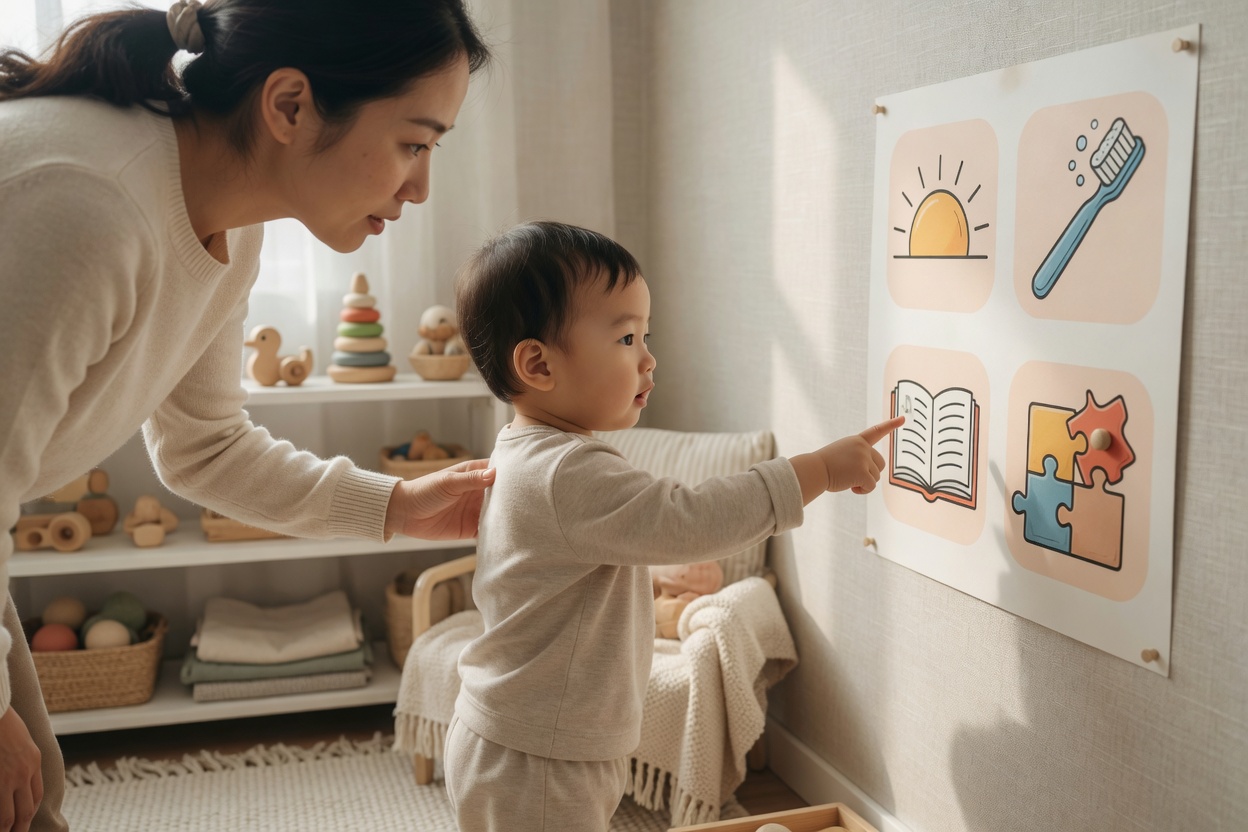
By focusing on consistent, responsive care and simple daily patterns, caregivers create an environment where curiosity and capability can grow. Small, repeated interactions within a caring routine help children feel safe and ready to explore the world around them.
