Təhsil mühitinin təhlükəsizliyi: məktəbə hazırlıq və müəllimlə əməkdaşlıq
Introduction. A secure educational environment is a foundation for children to develop confidence, curiosity, and readiness for school. The methodological guide for preparatory groups outlines practical approaches to reduce risk, organize space, and align daily routines with developmental goals. This article synthesizes those guiding principles into clear practices for educators and support staff.
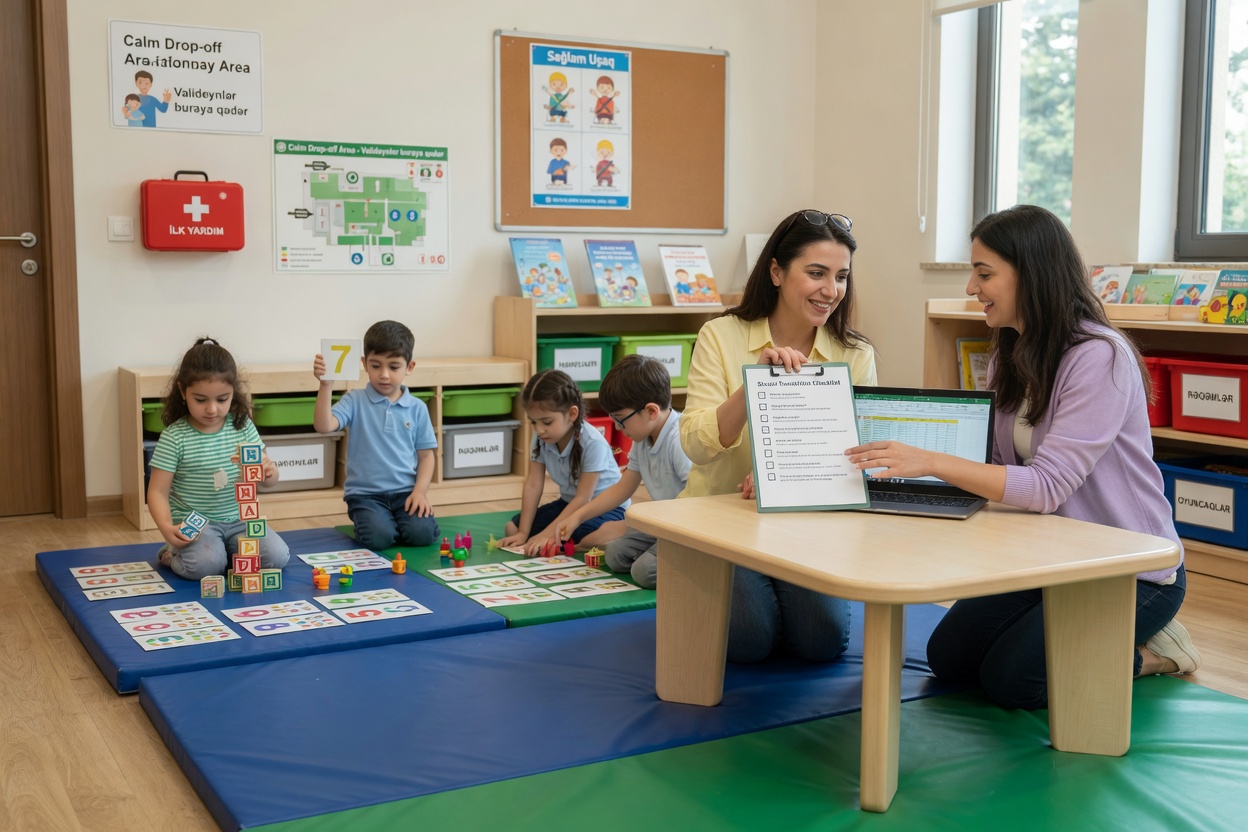
Creating a safe setting begins with intentional design of the physical space. Classrooms and activity areas should be arranged so that teachers can supervise all children without obstruction. Materials and furniture must match children’s size and abilities, and storage should prevent access to items that could cause harm. Pathways and play zones should allow free movement, minimizing tripping hazards and ensuring clear routes for evacuation when needed.
Hygiene and health measures are integral to safety. Regular cleaning of high touch surfaces and accessible handwashing facilities help prevent illness. Teachers should plan routines that include hygiene practices in ways that children can follow independently. Observation of children for signs of discomfort or illness supports timely responses and reduces the spread of health concerns among the group.
Organizing activities for school readiness and wellbeing
Structured daily routines support both safety and learning. Predictable transitions reduce stress and create opportunities for children to anticipate what comes next. Within routines, adults can scaffold emerging skills by offering choices, modeling behaviors, and providing consistent expectations. Play based activities that simulate classroom situations help children practice social rules and cooperative interactions in a controlled environment.
Materials and tasks should be developmentally appropriate and clearly presented. Learning corners for language, numeracy, fine motor, and creative play allow teachers to manage groups and observe individual progress. Rotating materials and setting simple rules for shared use promote responsibility and reduce conflict. Clear signage and labeled storage support independence while maintaining order.
Inclusive practices enhance safety by ensuring that every child feels seen and supported. Adapting activities and environments to diverse needs prevents exclusion and reduces the likelihood of behavior that stems from frustration. Teachers document observations to adjust plans and to coordinate with specialists when additional support is needed.
Collaboration between teachers, families, and colleagues
Safety and readiness are collective responsibilities. Regular communication with families builds consistency between home and the preparatory setting. Sharing routines, expectations, and simple strategies for supporting self care and social skills helps families reinforce learning. Informal notes or brief conversations at pickup and structured meetings provide avenues for mutual exchange about a childs needs and progress.
Within educational teams, collaboration enhances preparedness and response. Joint planning sessions help align daily activities with learning objectives while ensuring safety protocols are understood and practiced. Peer observations and shared reflection support professional growth and help teams identify environmental adjustments that improve supervision and engagement.
Training and clear documentation are essential. Staff should be familiar with emergency procedures, first aid basics, and protocols for reporting concerns about a child’s wellbeing. Written plans for routines, supervision, and transitions reduce uncertainty and ensure continuity when different adults are present.
Assessment, adaptation, and continuous improvement
Ongoing observation and assessment inform decisions about the learning environment. Teachers use notes, simple checklists, and examples of children s work to track readiness and to spot patterns that may indicate environmental risks or developmental needs. These records guide adaptations to space, materials, and teaching approaches.
Reflection on daily practice encourages small, practical changes that enhance safety and learning. Adjusting group size, reconfiguring activity areas, or introducing calming corners are examples of responses that can be tested and reviewed. Collaboration with colleagues and families ensures that adaptations are coherent and supportive.
Conclusion. Ensuring the safety of the educational environment in preparatory groups requires a balance of prevention, purposeful design, and collaborative practice. By organizing spaces thoughtfully, structuring routines that promote independence, and strengthening cooperation among teachers and families, educators create conditions that support children’s transition to school. The methodological guide for preparatory groups provides a framework for these efforts and encourages continuous attention to both physical safety and pedagogical quality.
